Orthodox Christian dating in Scotland
Orthodox dating in Scotland: Edinburgh, Glasgow, Dundee, St Andrews, Aberdeen and the Highlands, and how to find a spouse. Free, no subscription.
Create your profileAn illustration, not a data map.
- Greek
- Moscow Patriarchate


Short answer
Scotland's Orthodox Church is small, young and mostly borrowed. The Archdiocese of Thyateira and Great Britain lists nine communities north of the border, and only a few of them own their church: St Andrew's on Chapel Street in Edinburgh, under Bishop Raphael of Ilion, St Luke the Evangelist on Dundonald Road in Glasgow, and St Nicholas and St Blane on Laighill Loan in Dunblane; the others worship in Episcopal churches and university chapels, St Ninian's on King Street in Aberdeen, St Margaret's on Ancrum Road in Dundee, St Leonard's Chapel by the Pends in St Andrews, St John the Evangelist on Southside Road in Inverness, an oratory in Fort Augustus and a chapel inside Ardross Castle. The Diocese of Sourozh of the Moscow Patriarchate has four parishes with Scottish patrons, St Teneu in Edinburgh, St Kentigern in Glasgow at Govan Old Church, the Annunciation in the University of Dundee and St Machar in King's College Chapel in Old Aberdeen. Between them they cover the country from the Borders to the Moray Firth, and a Sunday in Scotland is a Liturgy in a building that was Presbyterian or Episcopal before it was Orthodox.
This page belongs to cana.love, which is free, made for people who want marriage rather than a match, and built around a form that asks what the coffee hour on Chapel Street or at Govan Old would ask you: which parish, how many Sundays a month, what you do about fasting, which of twelve Orthodox jurisdictions is yours. A Greek from Dowanhill and a convert from St Andrews begin from what they keep. A Chilean company runs it; it works in five languages, English first.
It is not an Orthodox-only site, and a section below says so in plain words.
Orthodox Christians in Scotland
Edinburgh first. The Greek Orthodox Community of St Andrew has its church at 33 Chapel Street, off Nicolson Square, and its offices on Meadow Lane; Bishop Raphael of Ilion is in charge, two archimandrites serve, one of whom also serves Dundee and St Andrews, and the community runs a youth fellowship named for St Gregory the Theologian and St Cuthbert of Lindisfarne, catechetical classes and a magazine. A kilometre south, at Laudate House on Chalmers Crescent in the Grange, the Moscow Patriarchate's parish of St Teneu, named for the mother of St Kentigern, worships under Fr Georgy Zavershinsky. North-west, in Dunblane, the community of St Nicholas has the church of St Nicholas and St Blane on Laighill Loan, under Fr David Gill, and the priests of Edinburgh drive to Fort Augustus on Loch Ness to serve the oratory of the Mother of God and St Cumein.
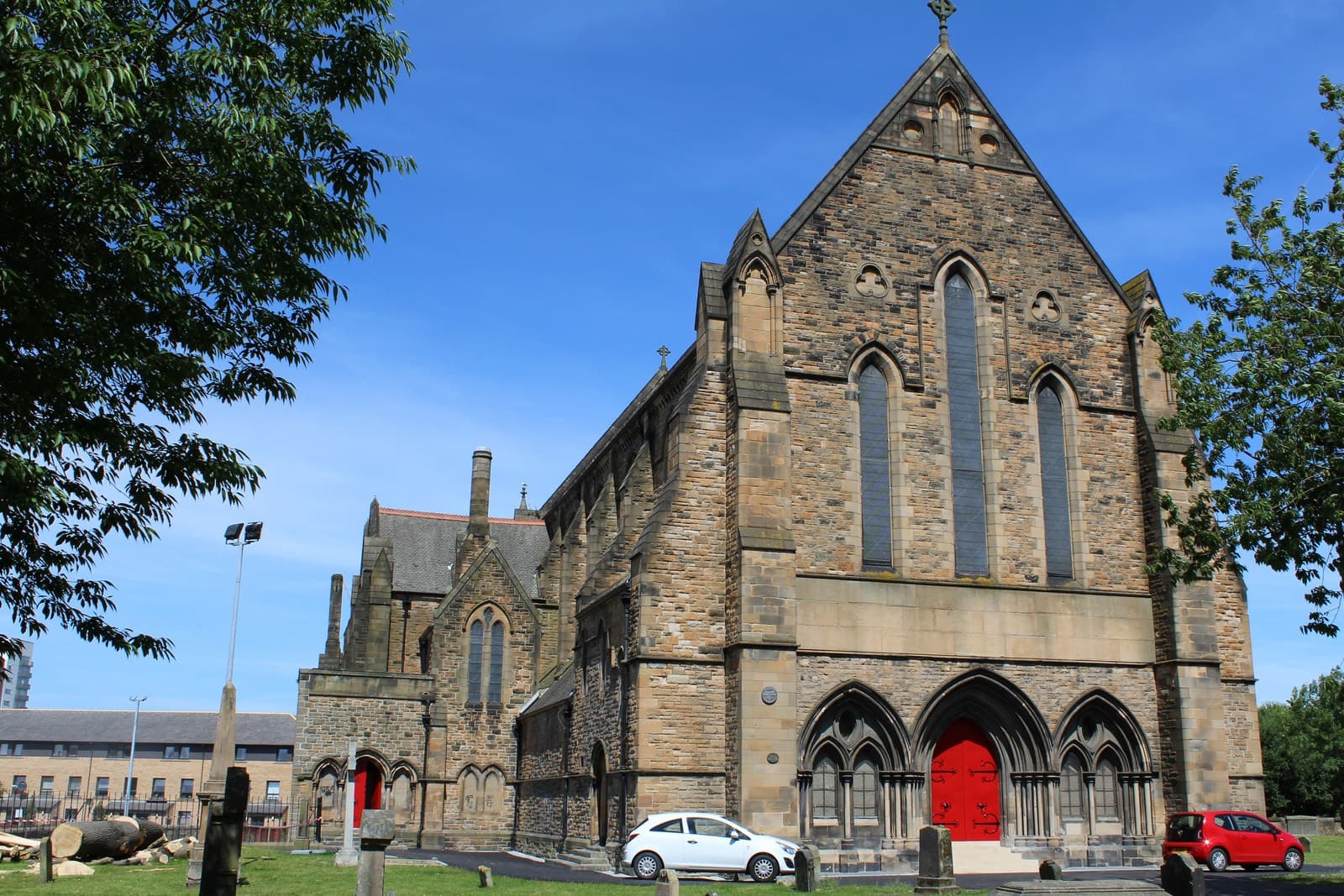
Then Glasgow. The Greek Orthodox Community of St Luke the Evangelist owns its church at 27 Dundonald Road in Dowanhill, in the West End near the university, under Archimandrite Marcus Mitchell; the Sourozh parish of St Kentigern, Glasgow's own saint, worships at Govan Old Church on Govan Road, the medieval church of the Govan stones, under Fr Nil Lubchenko. Three kilometres and the Clyde separate them.
Orthodox Studies Institute, 2024; figures from the United States, not Scotland's
The east coast is the universities. In Dundee the Orthodox Community of the Greek archdiocese worships in St Margaret's Episcopal Church on Ancrum Road and the Sourozh parish of the Annunciation in the University chaplaincy on Cross Row; in St Andrews the Orthodox Community worships in St Leonard's Chapel by the Pends, served by the same archimandrite as Dundee; in Aberdeen the Greek Community of St Matthew the Apostle worships in St Ninian's Episcopal Church on King Street under the Reverend Professor John Behr, and the Sourozh parish of St Machar in King's College Chapel in Old Aberdeen, both a short walk from the university. Fr Oleksandr Menshykov, the Sourozh dean for Scotland, serves both Aberdeen and Dundee.
The people filling these chapels have been counted, though not in Scotland. The Orthodox Studies Institute surveyed twenty American parishes across six jurisdictions and reported, of the converts received since 2013, that two thirds were under forty at their reception, that people in their thirties outnumbered every other decade, and that 44 percent were single when they came in.
Those are American figures, and Scotland has no survey of the kind on this page; but the person they describe is at the coffee hour in St Andrews or in Old Aberdeen: raised Church of Scotland or Catholic or nothing, a student or a lecturer, received as an adult, English-speaking, not yet married. Communities that meet in university chaplaincies and are served by professors of theology exist for that person, and the Scottish patrons of the Sourozh parishes, Kentigern, Teneu, Machar, say the same thing in the names.
Two jurisdictions cover the country on this page. The Archdiocese of Thyateira and Great Britain, of the Ecumenical Patriarchate, has communities in Edinburgh, Glasgow, Dunblane, Dundee, St Andrews, Aberdeen, Inverness, Fort Augustus and Ardross Castle. The Diocese of Sourozh of the Moscow Patriarchate has parishes in Edinburgh, Glasgow, Dundee and Aberdeen. The directories of the other jurisdictions present in Britain, Antiochian, Romanian and the Russian Church Abroad, were not read for this page, and whatever they keep in Scotland is not listed below.
Where the community gathers
Scotland's Orthodox gather in Edinburgh and the Forth valley, in Glasgow, along the east coast from Dundee to Aberdeen, and in the Highlands.
Edinburgh and Dunblane
Edinburgh and Dunblane are three of the twelve communities on this page. Chapel Street and Chalmers Crescent are a kilometre apart across the Meadows, both walkable from Waverley; Dunblane is fifty minutes by train from Edinburgh or half an hour from Glasgow, and its church of St Nicholas and St Blane stands on Laighill Loan above the town.
Glasgow
Glasgow is Dowanhill and Govan: St Luke's on Dundonald Road in the West End, a few minutes from Hillhead subway, and St Kentigern's at Govan Old Church on Govan Road across the river, three kilometres apart. Ayrshire and Lanarkshire look to Glasgow.
Dundee, Fife and Aberdeen
The east coast is Dundee, St Andrews and Aberdeen. Ancrum Road and Cross Row in Dundee are three kilometres apart; St Leonard's Chapel in St Andrews is half an hour away by bus from Leuchars; King Street and College Bounds in Aberdeen are a few hundred metres apart in Old Aberdeen, an hour and a quarter up the line from Dundee.
The Highlands
The Highlands are Inverness and the north. St John the Evangelist on Southside Road in Inverness houses the community of St Columba; Ardross Castle near Alness keeps the chapel of St John the Baptist, where Bishop Raphael himself serves; the oratory at Fort Augustus on Loch Ness is served from Edinburgh. Everything north of Inverness is the community of St Columba's, and the drive.
Churches and communities worth knowing
The church of the Archdiocese of Thyateira in Edinburgh, under Bishop Raphael of Ilion, with a youth fellowship, catechetical classes and a magazine.
33 Chapel StreetEdinburgh EH8 9AY
The Diocese of Sourozh in Edinburgh, in the Grange, under Fr Georgy Zavershinsky.
Laudate House1 Chalmers Crescent
Edinburgh EH9 1TW
The Orthodox church of the Forth valley, under Fr David Gill.
Church of St Nicholas and St BlaneLaighill Loan
Dunblane FK15 0BJ
The Greek church of Glasgow, in the West End, under Archimandrite Marcus Mitchell.
27 Dundonald RoadDowanhill
Glasgow G12 9LL
The Sourozh parish of Glasgow's patron, in the medieval church at Govan, under Fr Nil Lubchenko.
Govan Old Church866 Govan Road
Glasgow G51 3UU
The Thyateira community of Dundee, served from Edinburgh by Archimandrite Avraamy Neyman.
St Margaret's Episcopal Church19 Ancrum Road
Dundee DD2 2JL
The Sourozh parish of Dundee, in the university, under the dean for Scotland, Fr Oleksandr Menshykov.
Chaplaincy CentreUniversity of Dundee
Cross Row
Dundee DD1 4HN
The Orthodox community of the university town, in the chapel by St Leonard's School.
St Leonard's Chapeloff The Pends
St Andrews KY16 9RF
The Greek community of Aberdeen, under the Reverend Professor John Behr.
St Ninian's Episcopal Church696 King Street
Seaton
Aberdeen AB24 1SJ
The Sourozh parish of Aberdeen, in the university's old chapel in Old Aberdeen.
King's College ChapelCollege Bounds
Old Aberdeen AB24 3EE
The Orthodox community of the Highlands, under Archimandrite Anthony Kakalis.
St John the Evangelist ChurchSouthside Road
Inverness IV2 3BG
A chapel of the archdiocese inside a Highland castle, where Bishop Raphael of Ilion serves.
Ardross CastleAlness
Ross-shire IV17 0YE
Distances that decide everything
A schematic, not a map. Journey times as given in the text.
Scotland is a central belt and a long road north. Edinburgh to Glasgow is fifty minutes by train; Edinburgh to Dunblane fifty minutes, to Dundee an hour and a quarter, to St Andrews an hour and a quarter by way of Leuchars; Dundee to Aberdeen another hour and a quarter; Edinburgh to Inverness three and a half hours by train, Inverness to Aberdeen two and a half by the A96. Inside Edinburgh, Chapel Street and Chalmers Crescent are a kilometre apart; inside Glasgow, Dundonald Road and Govan Road three; inside Aberdeen, King Street and College Bounds a few hundred metres.
A search radius is a Sunday: Liturgy, coffee, and home by the afternoon. In the central belt that is Edinburgh, Glasgow and Dunblane together, a train apart; on the east coast, Dundee and St Andrews as one, Aberdeen as another; in the Highlands, Inverness and the roads out of it. Beyond that is a long train or a drive before every first meeting, and it is worth writing on your profile whether you would make it.
The Orthodox year in Scotland
Patronal feasts
St Andrew on 30 November in Edinburgh and St Andrews; St Luke on 18 October in Dowanhill; St Matthew on 16 November in Aberdeen; St Columba on 9 June in Inverness; St Nicholas on 6 December in Dunblane; and in the Sourozh parishes, by the Julian calendar, St Kentigern on 13 January in Govan, St Teneu on 18 July in Edinburgh, St Machar on 12 November in Old Aberdeen, the Annunciation on 7 April in Dundee. A feast day is the Sunday a community is fullest and most open to a stranger.
Pascha
Every jurisdiction keeps the same Pascha, 12 April in 2026 and 2 May in 2027, often weeks after the Easter of the Church of Scotland; the Paschal night is the night Chapel Street and Dundonald Road are full past midnight, and the week before it is when the communities of a city visit one another's Bridegroom services.
Two Christmases
The Greek archdiocese keeps the new calendar and Christmas on 25 December; the Sourozh parishes keep the Julian calendar and Christmas on 7 January, when Scotland is back at work after Hogmanay. A couple from two traditions keeps both.
Term-time
The communities in Dundee, St Andrews and Aberdeen worship in university chapels and chaplaincies, and their year follows the academic one: full from September to May, quieter in summer, and swelled at the start of each term by new students looking for a church.
The youth fellowship
St Andrew's in Edinburgh runs a youth fellowship named for St Gregory the Theologian and St Cuthbert of Lindisfarne, and catechetical classes; it is the room where a newcomer in their twenties is introduced rather than left at the door.
The Highland road
The priests of Edinburgh drive to Fort Augustus, the bishop to Ardross Castle, the dean of Sourozh between Aberdeen and Dundee; an Orthodox in the Highlands learns the service calendar by the road, and a visit to St Columba's in Inverness is where the north meets.
Dating across jurisdictions, and with converts
A kilometre separates two jurisdictions in Edinburgh; three, in Glasgow; a train, the central belt from the east coast; a long road, everything from Inverness. The cana.love form was written with those distances in mind, and it behaves the way a good parish does.
Where the coffee hour asks, the form has asked
Where the coffee hour asks who you are, the form has already asked: your parish, how many Sundays a month you are actually there, what you do about fasting, whether marriage is the aim; and an Orthodox member chooses one of twelve jurisdictions the form names, Greek, Moscow Patriarchate, Antiochian, ROCOR, Romanian, Serbian and six more, Catechumen among them, because the survey above says that is where many of the people looking are.
Where a parish speaks one language, five
Where a parish speaks the language of its founders, the site speaks five, English, Spanish, Portuguese, German and Russian, on every page; in Scotland that is the English of every community and the Russian of the Sourozh parishes, not the Greek of Chapel Street's liturgy; and when two members write in different languages, an optional AI feature can translate between them.
Where a priest checks, a reviewer checks
Where a priest gets to know a stranger before introducing them round, a reviewer looks at a profile and each of its photographs before any member sees them; whatever the automatic check cannot decide is decided by a person; and anyone who asks another member for money is out for good, no first warning.
Where the plate is passed, nothing
Where a parish passes the plate, the site does not: there is no subscription and no paid tier; who visited your profile and who liked it are shown to you free, which are precisely the two things most sites sell; the optional AI helpers run on credits, 150 given at registration and none for sale for now; and you sign in with a one-time link or code sent to your email, so there is no password to remember.
What cana.love is and is not
cana.love is not an Orthodox-only platform.
Catholics, Presbyterians and people of no confession who want the same kind of marriage are members too, and whom each member sees is set by that member's own filters. In a country where the Orthodox are a small minority worshipping mostly in borrowed churches, a narrower promise would be false. What the site does promise is exact: jurisdiction, practice and intention are questions on the form, and everyone you meet has answered them, as you did. The company behind it is Cana SpA of Santiago, Chile; the About page says the rest.
Meeting safely
- Never send money to someone you have not met face to face; on cana.love a request for money is grounds for a report, and whoever made it is removed for good.
- A first meeting belongs in a public place, with a friend told where you are, and the conversation belongs on the site until you, not the other person, decide to move it.
Reviews, reports and appeals are described on the guidelines page.
Common questions
Is cana.love available in Scotland?
Yes: any adult, anywhere, can join, and Scotland is no exception. Nothing is installed; the site opens in the browser of a phone or a computer, in English, Spanish, Portuguese, German or Russian.
How far should I search in Scotland?
The central belt, Edinburgh, Glasgow and Dunblane, as one region a train apart; Dundee and St Andrews as one, Aberdeen as another; Inverness and the Highlands as a third. Beyond that is a long train or a drive before every meeting; say on your profile whether you would make it.
Which Orthodox communities in Scotland serve in English?
The Thyateira communities in Dundee, St Andrews, Aberdeen, Inverness and Dunblane are English-speaking communities of mixed background, served by English-speaking clergy; Chapel Street and Dundonald Road serve in Greek and English; the Sourozh parishes in Slavonic and English. Each directory names the clergy; the language is best asked at the door.
Is there an Orthodox monastery in Scotland?
Neither directory read for this page lists one; the nearest houses of prayer it names are the oratory at Fort Augustus and the chapel at Ardross Castle, both served by visiting clergy. The Greek archdiocese's and Sourozh's directories are the places to check.
Where is the oldest Orthodox community in Scotland?
This page does not say: the directories give addresses and clergy, not founding dates. What is certain is that most Orthodox communities in Scotland worship in buildings older than themselves, from King's College Chapel in Old Aberdeen to Govan Old Church.
Where can I find every Orthodox parish in Scotland?
In the directories: the Archdiocese of Thyateira and Great Britain's communities under Scotland, with addresses and clergy; the Diocese of Sourozh's directory of parishes under Scotland; and, not read for this page, the Antiochian archdiocese's parish map and the Romanian and Russian Church Abroad directories.
Are the two calendars a problem for a couple?
Only for Christmas and the feasts with a fixed date. Lent, Pascha and Pentecost are the same day for every community in Scotland, Greek or Russian; a couple from both keeps two Christmases, 25 December and 7 January, and nobody in Edinburgh thinks that strange.
Next steps
Make your profile on cana.love, read the community guidelines before you write to anyone, and read the About page to see who runs the site. Then comes your city, its feast day or its term-time Liturgy, and the person.
Reviewed on September 20, 2026.
Photographs, all Wikimedia Commons: The Greek Orthodox church of St Luke the Evangelist on Dundonald Road, Glasgow — WeeHolly, CC BY-SA 4.0 · Govan Old Church on Govan Road, Glasgow, where the parish of St Kentigern worships — Leslie Barrie, CC BY-SA 2.0 · King's College Chapel in Old Aberdeen, where the parish of St Machar worships — Bill Harrison, CC BY-SA 2.0