Orthodox Christian dating in Indiana
Orthodox dating in Indiana: the Calumet steel towns, Indianapolis, Bloomington, South Bend and Fort Wayne, and how to find a spouse. Free, no subscription.
Create your profileAn illustration, not a data map.
- Greek
- Antiochian
- OCA
- Serbian
- ROCOR


Short answer
Indiana has two Orthodox worlds, two and a half hours apart on I-65. The older one is the Calumet, the steel corner in the north-west where the Romanians of Gary founded their church on 11 October 1908, the Russians of Gary theirs in 1911, the Greeks of Hammond theirs in 1936, and the Serbs built a cathedral in Merrillville in 1964; Michigan City's St George, founded in October 1910, was consecrated in 1914 by St Raphael of Brooklyn himself. The other is Indianapolis and the ring around it: a Greek community that met on South Meridian Street from the 1890s and was chartered in 1910, a Syrian St George built and consecrated in 1926, whose centenary falls in 2026, a Romanian parish of the same 1910, and, since the 1970s, whole congregations that walked into the Church together in Indianapolis, Bloomington and Crawfordsville. Fort Wayne and South Bend stand between the two, each with parishes of its own.
Where this page is going: cana.love, a free site for people who mean marriage, which asks on its form what a Hoosier parish would ask you in the hall after liturgy: which church, how many Sundays, what you do with the fasts, and which of twelve Orthodox jurisdictions is yours. The Greek from 106th Street and the convert from Blaine Avenue start from what they actually keep, not from a checkbox.
Not an Orthodox-only site; the section below says who else is here.
Orthodox Christians in Indiana
Gary was built in 1906 and the Church arrived with the first shifts. The Romanians of the mills organized their parish on 11 October 1908 and served the first liturgy on Christmas Day; the cornerstone of their church at Hayes and 19th Streets was consecrated the next October. The Russians and Rusyns followed in 1911 with St Mary's at 17th Avenue and Fillmore Street, a parish that changed its name twice and, in December 1998, its city, and is now the Protection of the Virgin Mary on Grand Boulevard in Merrillville. The Romanians moved to Merrillville too, consecrating their present church in 1971. Hammond's Greeks organized St Demetrios in 1936; the Serbs of the Region consecrated St Elijah, now a cathedral, in 1964. Up the lakeshore in Michigan City, St George was founded in October 1910, and it was its priest, Fr Antonius Bohlin, who first drove down to Indianapolis to serve the Arabic-speaking families there when they had no church of their own.
Those families had been in Indianapolis since 1890, when a couple from Talia and Zahle opened a dry-goods store near downtown. They bought a clubhouse on North Davidson Street in 1919, filed the Knights of St George with the Secretary of State on 8 February 1925, met the young Archimandrite Antony Bashir on 6 January 1926, and in the same year built and consecrated St George on North Sherman Drive. The Greeks of the city had been setting up an altar every Sunday on the upper floor of 27 South Meridian since the 1890s; they asked Greece for a priest in 1905 and incorporated Holy Trinity on 29 January 1910. The Romanians of Indianapolis founded Sts Constantine and Elena the same year. For half a century those three, with Fort Wayne's St Nicholas, founded by Macedonians at the end of the Second World War, were central and northern Indiana's Orthodox Church.
Orthodox Studies Institute, 2024; national figures, not Indiana's
The next chapter was written by people born Protestant. In 1975 a fellowship in Indianapolis, inspired by the Acts of the Apostles, began meeting in basements, living rooms, hotel rooms and a warehouse, moved into the same apartment complexes to live near one another, read the Church Fathers, watched most of its movement enter the Antiochian Archdiocese in 1988 and held back, and in 2001 asked the Orthodox Church in America to receive it; it is St John the Forerunner on Blaine Avenue now. In Bloomington a pan-Orthodox community that had been served by visiting clergy since 1959 became an Antiochian mission in 1989, a parish called All Saints in 1997 and, in 2001, the owner of twenty-four acres on South Fairfax Road. In Crawfordsville a community that had passed through several churches was received as St Stephen the First Martyr in 2001 and consecrated in 2011. Holy Trinity, meanwhile, bought land at 106th and Shelborne in Carmel in 1998, opened its Byzantine church there on Christmas Eve 2008 and was named a cathedral in 2018.
What the newest members look like has been measured. The Orthodox Studies Institute surveyed twenty parishes in six jurisdictions and fifteen states and reported of the converts received from 2013 on that two thirds were under forty at their reception, that people in their thirties outnumbered every other decade, and that 44 percent were single when they came in.
Indiana was not a line of its own in the report, but its subject is the person who will hand you a coffee at Blaine Avenue, Fairfax Road or Whitlock Avenue: raised Baptist or Methodist or nothing, received as an adult, not yet married. Three of the state's parishes were founded by exactly such people, and they are the ones you are likeliest to meet on the site this page belongs to.
Six jurisdictions cover the state. The Greek Orthodox Archdiocese has Holy Trinity Cathedral in Carmel, Holy Apostles in Indianapolis and Holy Trinity in Fort Wayne under the Metropolis of Detroit, and St Demetrios in Hammond, Sts Constantine and Helen in Merrillville, St George in Schererville, St Iakovos in Valparaiso and St Andrew in South Bend under the Metropolis of Chicago. The Orthodox Church in America's Diocese of the Midwest has St John the Forerunner in Indianapolis, St Stephen in Crawfordsville, the Protection of the Virgin Mary in Merrillville, St Thomas in Kokomo and St Elizabeth in Chesterton; its Romanian Episcopate has Sts Constantine and Elena in Indianapolis and the Descent of the Holy Ghost in Merrillville; its Bulgarian Diocese has St Nicholas in Fort Wayne. The Antiochian Archdiocese has St George in Fishers and All Saints in Bloomington, with missions in Lafayette, Terre Haute and Nashville, Indiana. The Serbian Orthodox Church's Diocese of New Gracanica and Midwestern America has St Elijah Cathedral and St Sava in Merrillville, St George in Schererville and in East Chicago, St Nicholas in Indianapolis, Sts Peter and Paul in South Bend and St Barnabas of Indiana in Muncie. The Russian Orthodox Church Outside Russia has St George in Michigan City, the Holy Virgin Protection in Goshen and a mission in Fort Wayne. The directory of the Assembly of Canonical Orthodox Bishops has the rest.
Where the community gathers
Indiana's Church is arranged along I-65 and US-31: Indianapolis and its ring in the middle, the Calumet in the north-west corner, South Bend and Fort Wayne across the north, Bloomington to the south.
Indianapolis and its ring
Indianapolis and its ring hold six of the fourteen parishes on this page. Holy Trinity Cathedral is on 106th Street in Carmel, on the north edge of the metro; St George is on 116th Street in Fishers, twenty minutes east of it; Sts Constantine and Elena is on West 16th Street and St John the Forerunner on South Blaine Avenue, both inside the old city; St Nicholas, the Serbian parish, is on Marsh Road to the north-west; Holy Apostles rents a chapel on North Central Avenue. Crawfordsville's St Stephen is fifty minutes west on I-74, Kokomo's St Thomas an hour north on US-31. The Antiochian St George and the Greek cathedral are a twenty-minute drive apart, and a Sunday visitor can manage both in a month.
The Calumet
The Calumet is a strip twenty miles long. St Demetrios is on Hohman Avenue in Hammond, by the Illinois line; the Protection of the Virgin Mary on Grand Boulevard and St Elijah Cathedral on Taft Street are two exits apart in Merrillville, with St Sava, the Descent of the Holy Ghost and Sts Constantine and Helen in the same town; Schererville has a Greek St George and a Serbian one; Valparaiso has St Iakovos and Chesterton St Elizabeth; St George in Michigan City is forty minutes east on I-94. Half of these parishes are a shorter drive from Chicago's South Side than from Indianapolis, and Chicago is where many of their members' cousins pray.
South Bend and Fort Wayne
The north is two cities ninety minutes apart on US-30. South Bend has St Andrew on Ironwood Road and the Serbian Sts Peter and Paul on Keria Trail; Goshen, half an hour east, has a Russian parish. Fort Wayne has St Nicholas on Crescent Avenue, whose founders were Macedonian and whose parish is now in the Bulgarian Diocese of the OCA, Holy Trinity on East Wallen Road, and a ROCOR mission. Muncie, between Fort Wayne and Indianapolis, has St Barnabas of Indiana.
Bloomington
The south is Bloomington. All Saints stands on twenty-four acres on South Fairfax Road, an hour down the road from Indianapolis and a short one from the university; Nashville, Indiana, half an hour east, has an Antiochian mission, and Terre Haute one to the west. Evansville and the Ohio River have no parish on this page.
Cathedrals and parishes worth knowing

A community that met on South Meridian Street from the 1890s, chartered on 29 January 1910; on the present land since 1998, in its Byzantine church since Christmas Eve 2008, a cathedral since 2018.
3500 West 106th StreetCarmel
Organized as the Knights of St George in February 1925, built and consecrated on North Sherman Drive in 1926; its centenary fell in 2026: the parish kept its festival in September and consecrates the church in October.
10748 East 116th StreetFishers
Founded in 1910 by immigrant families from Romania; its liturgy is in English and Romanian.
3237 West 16th StreetIndianapolis
A fellowship formed in 1975 that met in basements and a warehouse, moved next door to one another, and entered the Orthodox Church in America in 2001.
1421 South Blaine AvenueIndianapolis
The Serbian parish of the capital, in the Diocese of New Gracanica and Midwestern America.
7855 Marsh RoadIndianapolis
A parish since 2001, consecrated in 2011; the road outside fills with double-parked cars on a feast day, by the parish's own warning.
802 Whitlock AvenueCrawfordsville
Founded in 1911 at 17th and Fillmore in Gary as St Mary's Russian Orthodox Greek Catholic Church; in Merrillville since December 1998.
8600 Grand BoulevardMerrillville
Serving the Serbs of north-west Indiana and Chicagoland since 1964; the cathedral of its diocese in the Region.
8700 Taft StreetMerrillville

Organized in 1936; founded by Greek families, with Russians, Serbs, Romanians, Arabs, Albanians, Georgians and Bulgarians among its members since.
7021 Hohman AvenueHammond
Founded in October 1910 and consecrated in 1914 by St Raphael of Brooklyn; its priest once served the Syrian families of Indianapolis before they had a church.
303 Grace StreetMichigan City
The Greek parish of South Bend, in the Metropolis of Chicago.
52455 North Ironwood RoadSouth Bend
Founded at the end of the Second World War by the city's Macedonian community; on Crescent Avenue since 1983; a parish of the Bulgarian Diocese.
3535 Crescent AvenueFort Wayne
The Greek parish of Fort Wayne, with the city's Greek Fest.
110 East Wallen RoadFort Wayne
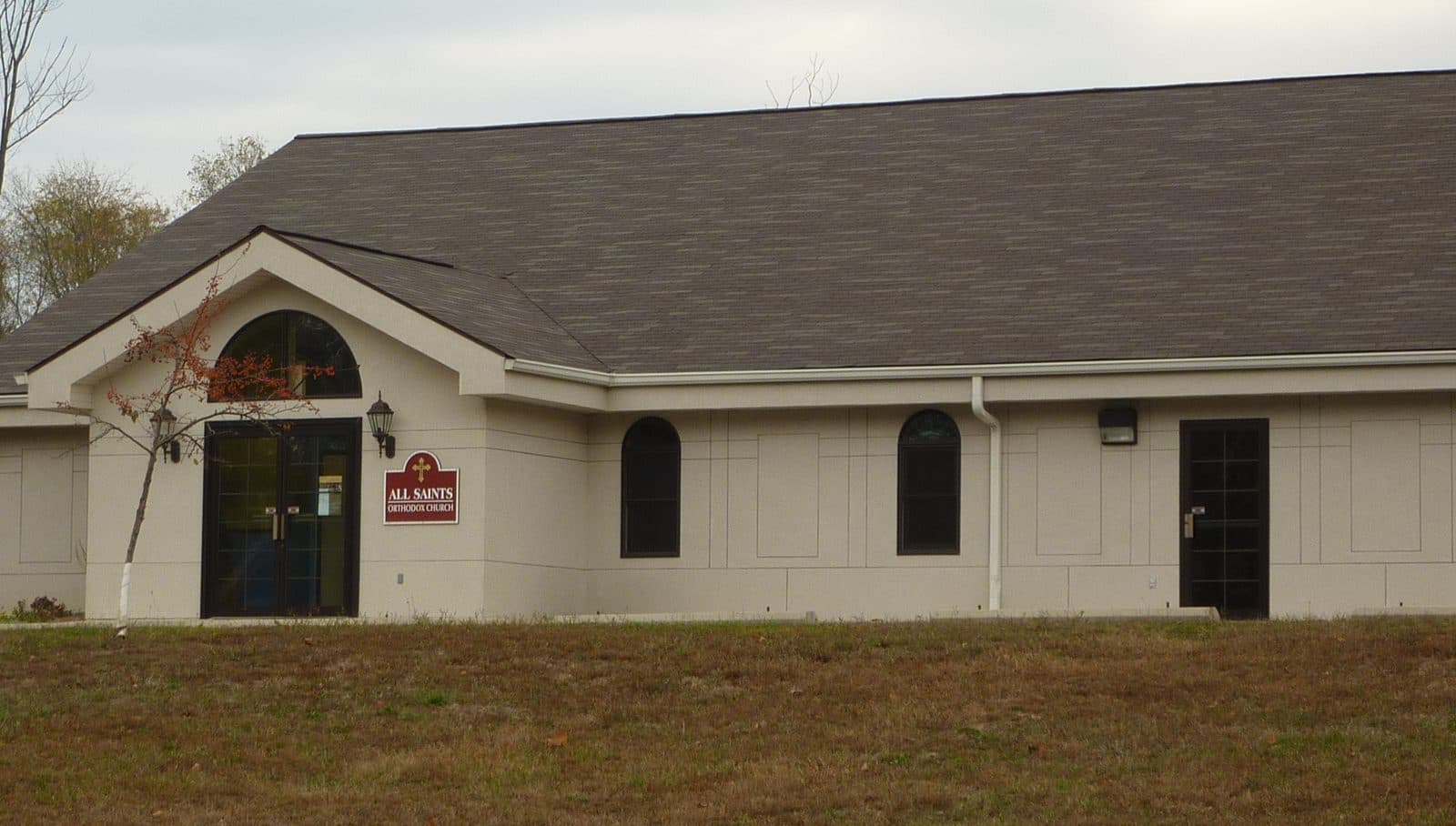
Pan-Orthodox services in Bloomington since 1959, an Antiochian mission from 1989, a parish from 1997; the first phase of its church rose on twenty-four acres in 2001.
6004 South Fairfax RoadBloomington
Distances that decide everything
A schematic, not a map. Driving times as given in the text.
The state is a rectangle with the Church in its corners. Indianapolis to Carmel is twenty-five minutes on US-31 and to Fishers half an hour on I-69; to Crawfordsville fifty minutes on I-74, to Kokomo an hour on US-31, to Bloomington an hour south. Indianapolis to Fort Wayne is two hours on I-69, to South Bend two and a half on US-31, to Merrillville two and a half on I-65. Inside the Calumet, Hammond to Merrillville is twenty minutes and Merrillville to Michigan City forty; South Bend to Fort Wayne is an hour and a half.
The radius that works is the one you would drive for a Sunday and be home by three. In Indiana that means one of four things: the Indianapolis ring, which reaches Carmel, Fishers, Crawfordsville and, at a stretch, Bloomington; the Calumet, which reaches Chicago more easily than the capital; the northern pair, South Bend and Fort Wayne, ninety minutes apart; or Bloomington and the university. Statewide is I-65 before every meeting, which is fine for some and not for others; say which on your profile.
The Orthodox year in Indiana
St George's centenary
The Fishers parish kept its Middle Eastern festival in September 2026 and consecrates its church in October, with a gala the same evening; a hundred years after the first consecration on North Sherman Drive, the whole city's Orthodox will be in the room.
Greek festivals
Holy Trinity in Carmel, Holy Trinity in Fort Wayne and the parishes of the Calumet each keep one, with dates on the parish sites; Bloomington's All Saints has its Festival on Fairfax. The festival is the one weekend a parish expects strangers, and the one weekend a stranger is easiest to talk to.
Serbian slavas
St Elijah in Merrillville keeps its patronal feast on 2 August, St Sava its on 27 January, St Nicholas in Indianapolis its in December; a slava is a family feast kept by a parish, and a guest at the table is the custom, not an exception.
The convert parishes
St John the Forerunner, All Saints and St Stephen were founded by people who came in as adults, and their coffee hours are where inquirers and catechumens are thickest; Holy Apostles in Indianapolis, chartered in 2009, is the youngest Greek parish in the state.
Sunday of Orthodoxy
Pan-Orthodox Vespers on the first Sunday of Great Lent gather Indianapolis's parishes in one church, the Calumet's in another and South Bend's in a third; orthodoxindy.org and the parish sites say where each year.
Diocesan gatherings
The Metropolises of Detroit and Chicago, the OCA Diocese of the Midwest, the Antiochian Diocese of Toledo and the Midwest and the Serbian diocese each keep assemblies, young-adult retreats and clergy-laity meetings, dated on their sites; they are the days the Calumet and the capital meet.
Dating across jurisdictions, and with converts
Twenty minutes of Indiana road separate the Greek cathedral on 106th Street from the Syrian St George on 116th, and forty separate both from the convert parish on Blaine Avenue; what separates their members is not distance but what each of them means by "I'm Orthodox". That is the gap the cana.love questionnaire is built to close, and it does so in four ways.
Practice, not labels
By asking about practice rather than labels: your parish, the number of Sundays a month you are in it, your fasting, whether marriage is the goal. Orthodox members pick one of twelve jurisdictions that stand on the form by name, OCA, ROCOR, Greek, Antiochian, Serbian, Romanian and six more, and one of the twelve is Catechumen, because the study above says that is where a good share of the people looking are.
Five languages, Russian included
By speaking five languages: English, Spanish, Portuguese, German and Russian, translated to the last page. In Indiana that reaches the Romanian of 16th Street and Merrillville, the Serbian of Taft Street, the Russian of Michigan City and Goshen, and the Spanish of Indianapolis and Hammond; if two members write in different ones, an optional AI feature can translate between them.
Checked before it is visible
By checking before showing: a profile or a photograph reaches other members only after review, and whatever the automatic pass cannot decide, a person decides. A member who asks another member for money is removed for good, without a first warning.
Free, with no paid tiers
By charging nothing: no subscription, no paid tier, no fee for seeing who visited you or who liked you, which are the two things most sites keep behind a wall. The optional AI helpers run on credits, 150 at registration and no way to get more for now, and nothing else on the site touches them. Sign-in is a one-time link or code to your email; there is no password.
What cana.love is and is not
cana.love is not an Orthodox-only platform.
Catholics, Protestants and people without a confession who want the same kind of marriage are members, and each member sets filters for whom to see. In a state where three parishes were founded by converts from Protestant churches and the newest Greek parish is not yet twenty years old, it would be strange to say otherwise. The promise the site does make is narrow: jurisdiction, practice and intention are questions on the form, and everyone you meet answered them, as you did. The About page has the whole account.
Meeting safely
- Send money to nobody you have not met face to face; on cana.love a request for money is a reason to report, and the one who asked is removed permanently.
- Meet the first time in a public place, with someone you trust told where, and keep the conversation on the site until moving it is your own idea.
Reviews, reports and appeals are described on the guidelines page.
Common questions
Is cana.love available in Indiana?
Yes. Adults anywhere can join, Indiana included; the site runs in a browser on a phone or a computer, needs no app, and works in English, Spanish, Portuguese, German and Russian.
How far should I search in Indiana?
Your corner of the state: the Indianapolis ring, the Calumet, South Bend with Fort Wayne, or Bloomington. Statewide means I-65 or US-31 before every meeting; widen only if that suits you.
Which Orthodox parishes in Indiana were founded by converts?
St John the Forerunner in Indianapolis, a 1975 fellowship received into the OCA in 2001; All Saints in Bloomington, a pan-Orthodox community that became an Antiochian mission in 1989 and a parish in 1997; and St Stephen in Crawfordsville, a parish since 2001. Most parishes in the state now serve in English.
Is there an Orthodox monastery in Indiana?
None on this page: the directories of the OCA, the Russian Church Abroad and the Serbian diocese list no monastery in the state.
Where is the oldest Orthodox parish in Indiana?
In Gary: the Romanians organized their parish on 11 October 1908 and the Russians theirs in 1911; both are now in Merrillville. Indianapolis's Greek Holy Trinity and Romanian Sts Constantine and Elena date from 1910, and Michigan City's St George from October 1910.
Where can I find every Orthodox parish in Indiana?
The directory of the Assembly of Canonical Orthodox Bishops, then the diocesan lists: the Greek Metropolises of Detroit and Chicago, the OCA Diocese of the Midwest with its Romanian Episcopate and Bulgarian Diocese, the Antiochian Archdiocese, the Serbian Diocese of New Gracanica and Midwestern America, the ROCOR Diocese of Chicago and Mid-America; and orthodoxindy.org for central Indiana.
Next steps
Open a profile on cana.love, read the community guidelines before you write to anyone, and see the About page for who runs the site. Then your corner of Indiana, its festival weekend, and the person.
Reviewed on September 19, 2026.
Photographs, all Wikimedia Commons: Holy Trinity Greek Orthodox Cathedral on 106th Street, Carmel — Valerie Everett, CC BY-SA 2.0 · St Elijah Serbian Orthodox Cathedral on Taft Street, Merrillville — Farragutful, CC BY-SA 4.0 · The gilded domes of Holy Trinity Greek Orthodox Cathedral, Carmel — Valerie Everett, CC BY-SA 2.0 · All Saints Orthodox Church on South Fairfax Road, south of Bloomington — Vmenkov, CC BY-SA 2.0 · St Demetrios Greek Orthodox Church on Hohman Avenue, Hammond, in winter — Lotzman Katzman, CC BY-SA 3.0