Orthodox Christian dating in Canada
Orthodox dating in Canada: Montreal, Ottawa and Toronto, the prairie cities, Vancouver and Halifax, and how to find a spouse. Free, no subscription.
Create your profileAn illustration, not a data map.
- Greek
- Antiochian
- OCA
- ROCOR
- Serbian
- Monastery

Short answer
Canada's Orthodox Church has two roots and a long trunk. The prairie root is the oldest: the Russian mission that received the settlers of Alberta, Saskatchewan and Manitoba a century ago left behind churches with cemeteries at Smoky Lake, Andrew, St Walburg and Canora, a Russian Greek Orthodox Cathedral of the Holy Trinity on Manitoba Avenue in Winnipeg, and the Archdiocese of Canada of the Orthodox Church in America, whose archbishop sits in Ottawa at the Cathedral of the Annunciation and St Nicholas on Eccles Street. The city root is Greek and Arab: the Greek Orthodox Archdiocese of Canada with St George's on Bond Street in Toronto, St Nicholas Cathedral in Scarborough, the Cathedral of St George on Côte-Sainte-Catherine in Montreal and parishes from Halifax to Victoria; the Antiochian St George on Jean-Talon in Montreal, a National Historic Site since 1999; the Russian Church Abroad's Holy Trinity Cathedral on Henry Street in Toronto; St Sava of the Serbs on River Street. The trunk runs from the Atlantic to the Pacific, with a monastery of All Saints of North America in the Fraser Valley and a hermitage of the Annunciation in Nova Scotia.
The site this page belongs to is cana.love: free, built for people who want marriage rather than a match, with a form that asks what the coffee hour on Bond Street or on Manitoba Avenue would ask you: which parish, how many Sundays a month, what you do about fasting, which of twelve Orthodox jurisdictions is yours. A Lebanese Montrealer from Jean-Talon and a convert from Calgary begin from what they keep. The site is run by a Chilean company and works in five languages, English first; French is not among them, and the section below says so again.
It is not an Orthodox-only site; the section below says so plainly.
Orthodox Christians in Canada
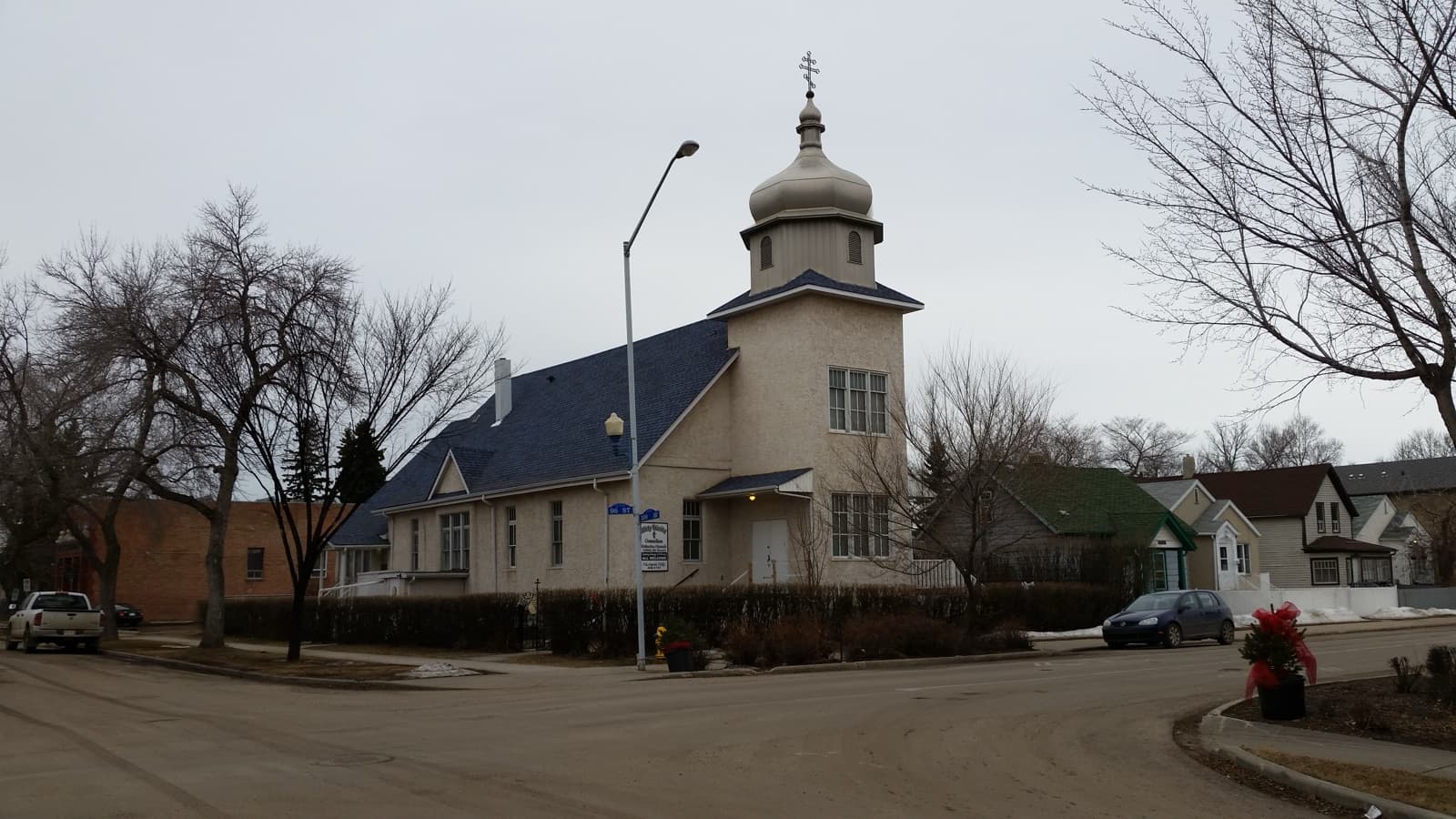
The prairies first. The Orthodox Church in America's Archdiocese of Canada lists its communities by deanery from Atlantic Canada to British Columbia and Yukon, and the list reads like a map of the settlement of the West: Holy Trinity Church and Cemetery at Smoky Lake, the Nativity of the Holy Virgin at Kysylew-Andrew, Sts Peter and Paul at St Walburg, Holy Apostle Andrew at Canora, Holy Trinity at Moose Jaw, and in the cities the parishes those settlers' grandchildren built, the Russian Greek Orthodox Cathedral of the Holy Trinity on Manitoba Avenue in Winnipeg, Holy Trinity on 96 Street in Edmonton, St Herman of Alaska Sobor on 167 Street, St Peter the Aleut in Calgary, Holy Resurrection Sobor on East 43rd Avenue in Vancouver. The archdiocese's seat is in Ottawa, at the Cathedral of the Holy Annunciation and St Nicholas on Eccles Street under Archbishop Irénée; it keeps a Montreal Institute of Orthodox Theology, Orthodox Christian Studies at Trinity College in Toronto, a prison fellowship named for St Silas and a page on the Church and Indigenous peoples in Canada, and it makes an annual pilgrimage to the Hermitage of the Holy Annunciation in Nova Scotia.
Then Montreal. The Greek Orthodox Archdiocese of Canada, of the Ecumenical Patriarchate, keeps its Cathedral of St George at 2455 Côte-Sainte-Catherine, with the Annunciation on St Roch Street, the Archangels in Cartierville and the Dormition on De L'Épée; the Antiochians keep St George on Jean-Talon Est, built in 1939 and 1940 for the Syrian Orthodox community of the city and designated a National Historic Site of Canada in 1999; the Orthodox Church in America keeps the Sign of the Theotokos on boulevard Saint-Joseph Est on the Plateau and a Moldovan parish of the Dormition on rue Guizot; and Christ the Saviour at Shefford, in the Eastern Townships, is a monastery chapel with a parish of St Seraphim.
Orthodox Studies Institute, 2024; figures from the United States, not Canada's
Toronto is where the jurisdictions stand shoulder to shoulder. St George's Greek Orthodox Church on Bond Street, in the heart of downtown, and St Nicholas Cathedral on Finch Avenue East in Scarborough belong to the Greek archdiocese, whose archbishop Apostolos sits in the city and whose Patriarchal Toronto Orthodox Theological Academy trains its clergy; the Russian Orthodox Church Outside Russia's Holy Trinity Cathedral on Henry Street, by the University of Toronto, is the seat of its Diocese of Montreal and Canada; the Orthodox Church in America's Christ the Saviour Cathedral is on Manning Avenue in the Annex, with a mission of the Holy Myrrhbearers at Trinity College on Hoskin Avenue; St Sava Serbian Orthodox Church on River Street was consecrated on 22 May 1955; and St Demetrios on Thorncliffe Park Drive and All Saints on Bayview Avenue fill the Greek suburbs. Everything is a streetcar ride from everything else.
The people filling the mission parishes have been counted south of the border. The Orthodox Studies Institute surveyed twenty American parishes across six jurisdictions and reported, of the converts received since 2013, that two thirds were under forty at their reception, that people in their thirties outnumbered every other decade, and that 44 percent were single when they came in.
Those are American numbers, and Canada is not in them; but the person they describe is at the coffee hour in Calgary at St Peter the Aleut or in Kingston at St Gregory of Nyssa: raised Anglican or Catholic or United or nothing, received as an adult, not yet married. The Archdiocese of Canada's missions from Cranbrook to Trois-Rivières exist for that person, and the Greek and Russian cathedrals have made room for them.
Five jurisdictions cover the country. The Orthodox Church in America's Archdiocese of Canada has the Ottawa cathedral, cathedrals in Toronto, Winnipeg and Vancouver, parishes and missions in every province, and the monasteries at Dewdney in British Columbia and New Germany in Nova Scotia. The Greek Orthodox Archdiocese of Canada has cathedrals in Montreal and Toronto and communities from Glace Bay to Victoria. The Russian Orthodox Church Outside Russia has its Diocese of Montreal and Canada with the Toronto cathedral. The Antiochian Archdiocese has St George in Montreal and parishes in the cities. The Serbian Orthodox Eparchy of Canada has St Sava in Toronto and its cathedral in Hamilton. Romanian and Bulgarian parishes are in the big cities as well.
Where the community gathers
Canada's Church is the Saint Lawrence corridor from Montreal to Toronto, the prairie cities, the West Coast, and Halifax at the far end.
The Saint Lawrence corridor
The corridor holds eight of the fourteen parishes on this page. In Montreal, the Greek cathedral of St George on Côte-Sainte-Catherine, the Antiochian St George on Jean-Talon Est and the Sign of the Theotokos on Saint-Joseph Est are all within five kilometres of each other by Métro; Ottawa, two hours west by VIA Rail, has the Annunciation and St Nicholas Cathedral on Eccles Street in Centretown; Toronto, five hours on by train or an hour and a quarter by air, has St George's on Bond Street, Holy Trinity on Henry Street, Christ the Saviour on Manning Avenue and St Sava on River Street, four jurisdictions within three kilometres of Yonge and Dundas, and St Nicholas Cathedral out on Finch Avenue in Scarborough.
The prairies
The prairies are Winnipeg, Calgary and Edmonton, and the country in between. Holy Trinity Cathedral on Manitoba Avenue in Winnipeg's North End and St Demetrios on Grant Avenue; St Peter the Aleut on 33 Avenue SW in Calgary and St Demetrios on Tamarac Crescent; Holy Trinity on 96 Street and St Herman's Sobor on 167 Street in Edmonton with the Greek St George on 124 Street; and between them the pioneer parishes of Smoky Lake, Andrew, Canora and Moose Jaw, with a hermitage of the Holy Prophet Elias at Smoky Lake.
The West Coast
The West Coast is Vancouver and the island. Holy Resurrection Russian Orthodox Sobor on East 43rd Avenue, the Greek St George on Arbutus Street and Sts Nicholas and Demetrios on Boundary Road, St Herman of Alaska in Langley, All Saints of North America Monastery at Dewdney in the Fraser Valley under Archbishop Lazar, and on Vancouver Island All Saints of Alaska in Victoria and St Barnabas in the Comox Valley.
The Atlantic
The Atlantic is Halifax and the hermitage. The Greek St George on Purcell's Cove Road in Halifax, an Orthodox parish across the cove, St Nicholas in Saint John, Sts Anargyroi in Glace Bay, a mission station in Portugal Cove in Newfoundland, and the Hermitage of the Holy Annunciation at New Germany in the Nova Scotia woods, where the archdiocese goes on pilgrimage every year.
Cathedrals and parishes worth knowing
The cathedral of the Greek Orthodox Archdiocese of Canada in Montreal, on the north slope of the mountain.
2455 Côte-Sainte-Catherine RoadMontreal
QC H3T 1A8
Built in 1939 and 1940 for the Syrian Orthodox community of Montreal and designated a National Historic Site of Canada in 1999.
555 Rue Jean-Talon EstMontreal
QC H2R 1T8
The Orthodox Church in America's parish on the Plateau, under Archpriest Sebastian Scratch.
750 Boulevard Saint-Joseph EstMontréal
QC H2J 1K2
The cathedral of the Archdiocese of Canada and the seat of Archbishop Irénée, in Centretown.
15 Eccles StreetOttawa
ON K1R 6S1
The Greek church of downtown Toronto, a block from Yonge and Dundas.
115 Bond StreetToronto
ON M5B 1Y2
The cathedral of the Diocese of Montreal and Canada of the Russian Orthodox Church Outside Russia, beside the University of Toronto.
23 Henry StreetToronto
ON M5T 1W9
The Orthodox Church in America's cathedral in Toronto, in the Annex, with three priests.
823 Manning AvenueToronto
ON M6G 2W9
Consecrated on 22 May 1955; the Serbian church of Toronto, in the Serbian Orthodox Eparchy of Canada.
203 River StreetToronto
ON M5A 3P9
The cathedral of the North End, whose name keeps the memory of the Russian mission to the Greek Orthodox settlers of the prairies.
643 Manitoba AvenueWinnipeg
MB R2W 2H1
The Orthodox Church in America's older parish in Edmonton, in McCauley, under Archpriest Daniel Friesen.
10902 96 Street NWEdmonton
AB T5H 2K3
The Calgary parish named for the Alaskan martyr, with two priests and a deacon in Marda Loop.
1802 33 Avenue SWCalgary
AB T2T 1Y9
The Orthodox Church in America's cathedral on the West Coast, with three priests.
75 East 43rd AvenueVancouver
BC V5W 1S7
The church of the Hellenic Community of Vancouver on the West Side.
4500 Arbutus StreetVancouver
BC V6J 4A2
The Greek church of Halifax and the Maritimes, on the Northwest Arm.
1146 Purcell's Cove RoadHalifax
NS B3N 1R4
Distances that decide everything
A schematic, not a map. Journey times as given in the text.
Canada is a corridor and then a continent. Montreal to Ottawa is two hours by VIA Rail; Montreal to Toronto five hours by train and an hour and a quarter by air, Ottawa to Toronto four and a half by train; Toronto to Winnipeg two hours forty by air and two days by road; Winnipeg to Calgary another thirteen hundred kilometres; Calgary to Edmonton three hours on Highway 2; Calgary to Vancouver an hour and a half by air and a long day through the mountains; Halifax to Montreal an hour and three quarters by air. Inside Toronto, Bond Street, Henry Street, River Street and Manning Avenue are all within three kilometres; inside Montreal, Côte-Sainte-Catherine, Jean-Talon and Saint-Joseph within five.
The radius that works is the one you would keep on a Sunday, Liturgy and coffee hour and home by mid-afternoon. In Toronto or Montreal that is the whole city, and a Greek from Bond Street and a Serb from River Street are one streetcar apart; in Calgary or Edmonton it is the city and the towns within an hour; in Winnipeg, Winnipeg. A search across the country means a flight before every first meeting, which some are happy to take and some are not, and the profile is where to say which.
The Orthodox year in Canada
Patronal feasts
St George on 23 April in Montreal twice, in Toronto, Vancouver, Edmonton and Halifax; Holy Trinity at Pentecost on Henry Street, on Manitoba Avenue and on 96 Street; the Annunciation in Ottawa; St Sava on 27 January on River Street; St Peter the Aleut on 24 September in Calgary. A feast day is the Sunday a parish is fullest and most open.
Pascha
Every jurisdiction keeps it on the same day, 12 April in 2026 and 2 May in 2027, often weeks after the Easter of the civil calendar; the Paschal night is the night the cathedrals of Toronto and Montreal are full until dawn, and the week before it is when the parishes of a city visit one another's Bridegroom services.
Two Christmases
The Greek and Antiochian parishes keep the new calendar and Christmas on 25 December; the Russian Church Abroad, the Serbs and many of the older parishes keep the Julian calendar and Christmas on 7 January, when the country has gone back to work. A couple from two traditions keeps both, and in Toronto that is a common household.
The pilgrimage
The Archdiocese of Canada makes an annual pilgrimage to the Hermitage of the Holy Annunciation at New Germany in Nova Scotia; All Saints of North America Monastery at Dewdney receives visitors in the Fraser Valley; the hermitages at Westport in Ontario and Smoky Lake in Alberta keep their chapels. A pilgrimage is where people from different parishes share a bus and a meal.
The assemblies
The Archdiocese of Canada holds archdiocesan assemblies, the last in 2026; the Greek archdiocese its Archdiocesan Council and Philoptochos retreats; those are the days when the parishes of the whole country are in one room, and the young adults with them.
The academies
The Montreal Institute of Orthodox Theology, Orthodox Christian Studies at Trinity College in Toronto and the Patriarchal Toronto Orthodox Theological Academy are where inquirers and catechumens sit in the same lectures as the seminarians, and where the coffee afterwards is in English.
Dating across jurisdictions, and with converts
Three kilometres separate four jurisdictions in downtown Toronto; five, three parishes in Montreal; a flight, the corridor from the prairies and the coast. The cana.love form was written with those distances in mind, and here it is in the order people ask.
Asked first: parish and practice
First, what it asks: your parish, how many Sundays a month you are actually in it, what you do about fasting, whether marriage is the aim; and an Orthodox member chooses one of twelve jurisdictions the form names, OCA, ROCOR, Greek, Antiochian, Serbian, Romanian and six more, with Catechumen among them, because the survey above says that is where many of the people looking are.
Five languages, Russian included
Second, the languages: five, English, Spanish, Portuguese, German and Russian, on every page; in Canada that is the English of every parish and the Russian of Henry Street and Manning Avenue, not the French of Montreal nor the Greek and Arabic of its cathedrals; and two members writing in different languages can have an optional AI feature translate between them.
Reviewed before it is seen
Third, the checking: a profile and every photograph are reviewed before another member can see them, what the automatic check cannot settle goes to a person, and a member who asks another for money is removed for good, without a first warning.
No bill, no paid tier
Last, the bill: there is none, no subscription and no paid tier, seeing who visited you and who liked you is free, and the two things most sites charge for are the two things this one does not; the optional AI helpers use credits, 150 at registration and no way to add to them for now, and sign-in is a one-time link or code to your email, with no password to keep.
What cana.love is and is not
cana.love is not an Orthodox-only platform.
Catholics, Protestants and people of no confession who want the same kind of marriage are members too, and whom each member sees is set by that member's own filters. In a country whose Orthodox archdiocese keeps a page on the Church and Indigenous peoples and whose prairie parishes were founded by settlers received into Orthodoxy a century ago, saying anything narrower would be false. What the site promises is narrow and exact: jurisdiction, practice and intention are questions on the form, and everyone you meet has answered them, as you did. The company behind it is Cana SpA of Santiago, Chile; the About page says the rest.
Meeting safely
- Send money to no one you have not met face to face; on cana.love asking for it is a reason to report, and the one who asked is removed for good.
- A first meeting in a public place, with someone you trust told where you are, and the conversation kept on the site until taking it elsewhere is your own choice.
How reviews, reports and appeals work is written on the guidelines page.
Common questions
Is cana.love available in Canada?
Yes. Adults anywhere can join, Canada included; the site runs in the browser of a phone or a computer with nothing to install, in English, Spanish, Portuguese, German and Russian.
How far should I search in Canada?
Toronto or Montreal as one city, with Ottawa two hours away for a feast; Calgary or Edmonton with the towns within an hour; Winnipeg as Winnipeg; Vancouver with the Lower Mainland. Countrywide means a flight before every meeting; say on your profile whether you would.
Which Orthodox parishes in Canada serve in English?
The Archdiocese of Canada of the Orthodox Church in America serves in English in most of its parishes and missions, with Slavonic in the older prairie churches; the Greek and Antiochian parishes serve in Greek or Arabic with English; the Russian Church Abroad in Slavonic with English; the Serbs in Serbian with English. Each archdiocese's directory says which.
Is there an Orthodox monastery in Canada?
All Saints of North America Monastery at Dewdney in the Fraser Valley of British Columbia, under Archbishop Lazar; the Hermitage of the Holy Annunciation at New Germany in Nova Scotia; the hermitages of St Anthony the Great and the Protection of the Theotokos at Westport in Ontario and of the Holy Prophet Elias at Smoky Lake in Alberta, all in the Orthodox Church in America's Archdiocese of Canada.
Where is the oldest Orthodox parish in Canada?
On the prairies: the Archdiocese of Canada lists parishes with cemeteries at Smoky Lake, Andrew, St Walburg and Canora that date from the settlement of the West; in the cities, the Antiochian St George in Montreal was built in 1939 and 1940 and St Sava in Toronto consecrated in 1955.
Where can I find every Orthodox parish in Canada?
In the archdiocesan directories: the Archdiocese of Canada's list of communities by deanery, with addresses and clergy; the Greek Orthodox Archdiocese of Canada's parishes by province; the Russian Church Abroad's Diocese of Montreal and Canada; the Antiochian Archdiocese's parish directory; the Serbian Orthodox Eparchy of Canada.
Are the different calendars a problem for a couple?
Only at Christmas and the fixed feasts: Pascha, Lent and Pentecost fall on the same day for every parish in Canada. A Greek-and-Russian couple keeps Christmas on 25 December and 7 January, and in Toronto that is nothing unusual.
Next steps
Create your profile on cana.love; read the community guidelines before your first conversation and the About page for who runs the site. Then your city, its patronal feast or its pilgrimage bus, and the person.
Reviewed on September 20, 2026.
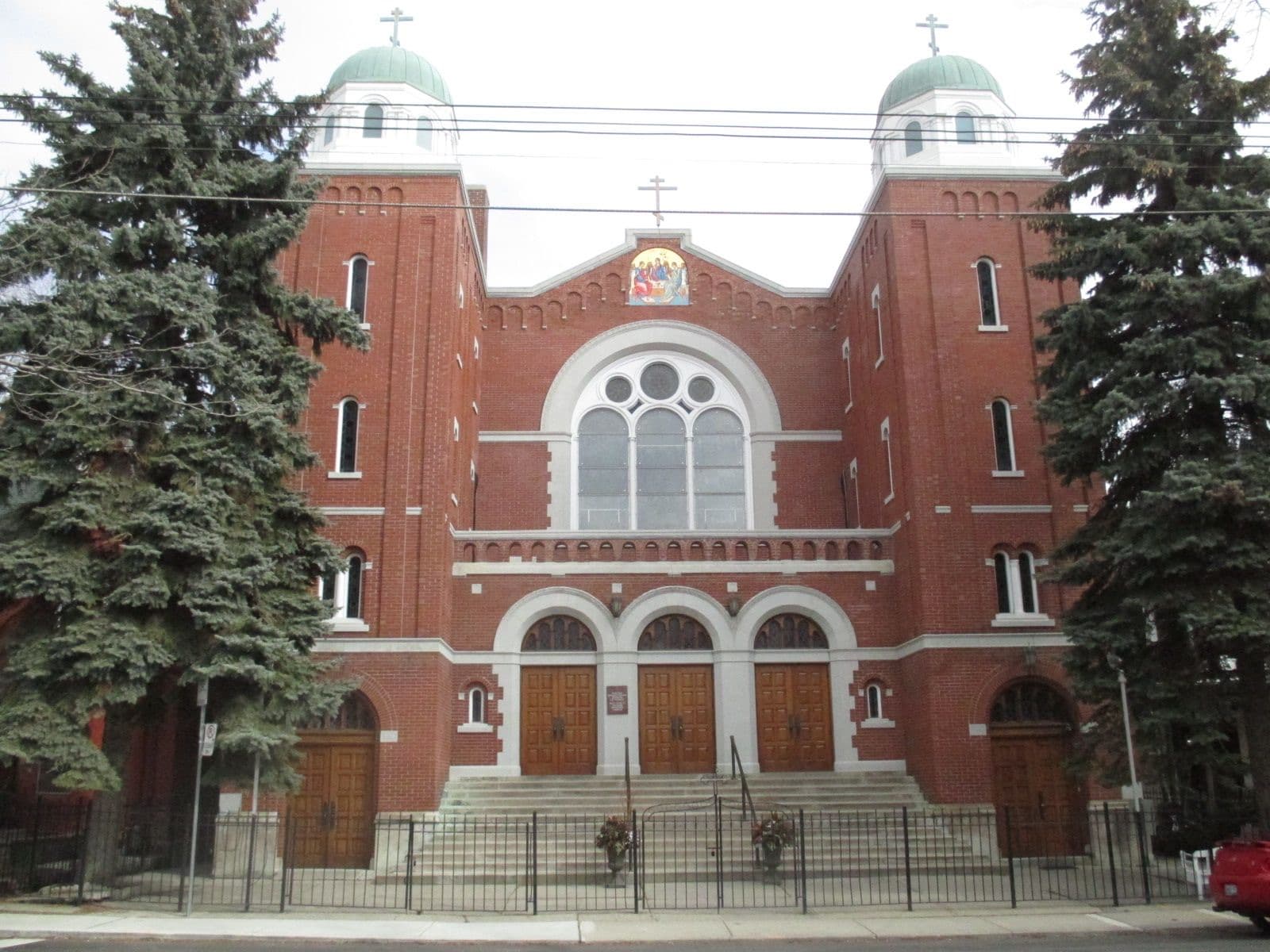
Photographs, all Wikimedia Commons: St George Antiochian Orthodox Church on Rue Jean-Talon Est, Montreal — Bohemian Baltimore, CC BY-SA 4.0 · Holy Trinity Russian Orthodox Cathedral on Henry Street, Toronto — TheTrolleyPole, CC BY-SA 4.0 · Holy Trinity Orthodox Church on 96 Street, Edmonton — Amqui, CC BY-SA 4.0